
Mumbai

My first experience of Mumbai was the sound. Not just one sound. Layers of sounds so thick you stop trying to separate them: horns, engines, someone’s voice from a speaker you can’t see, a bell, a cart wheel over uneven pavement. Then the heat. Then the many smells: exhaust, cooking oil, marigold, dust, and something sweet, unrecognizable. You step out of the car, and your senses don't know what to do with it. Within three days, it stops trying to. You just stand in it.
I was in Mumbai for part of a four-month trip through India, in late 2023 and into 2024. These photos are from that time. Looking at them now, back in the quiet of New Mexico, what surprises me all over again is how much I liked being there. I had not expected that. I had expected difficulty, strangeness, a place so different from anything I knew. What I got instead was color, vibrancy, and the feeling of being, for the first time in a long while, fully awake.
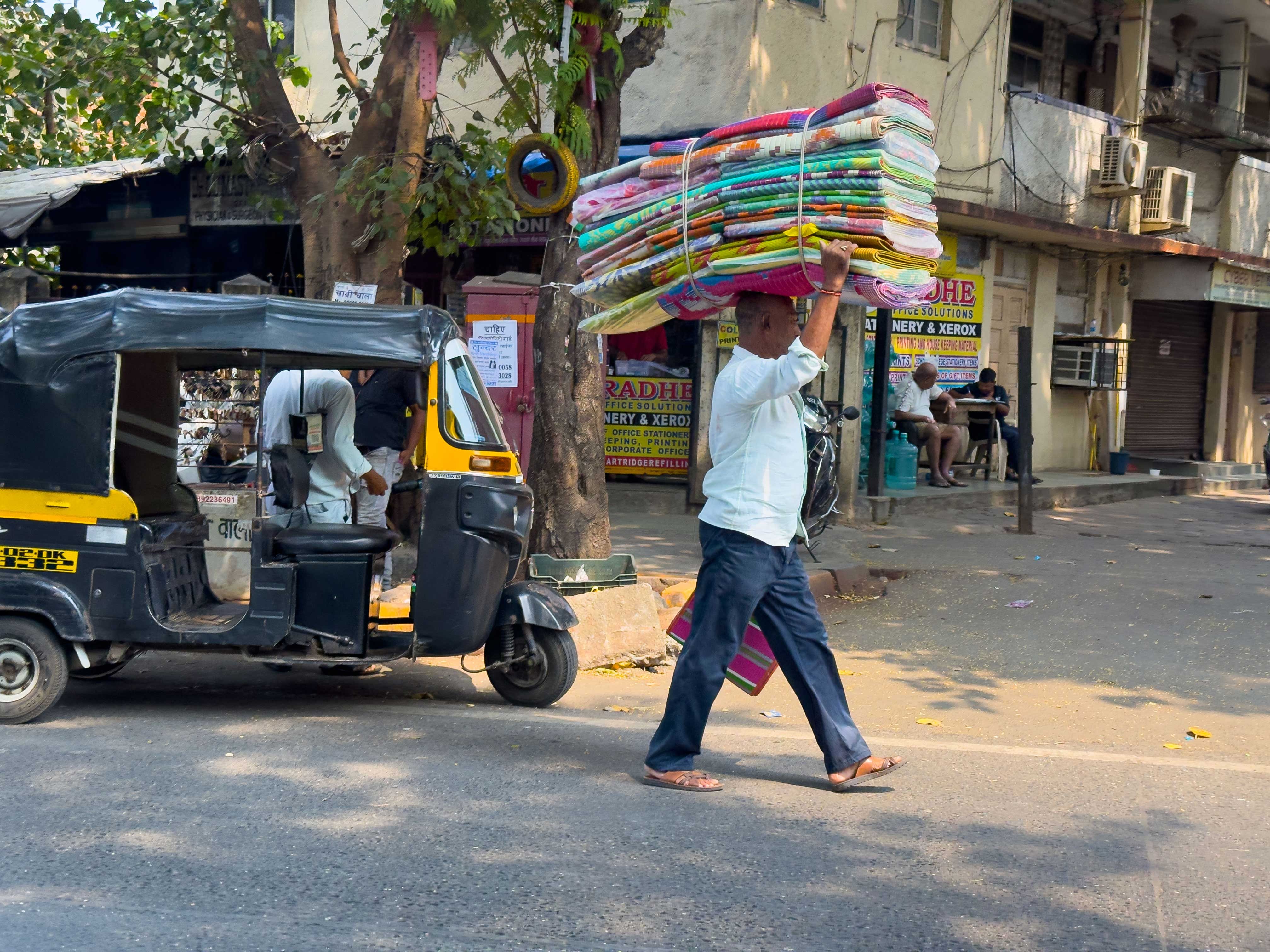
A man carries a tall stack of folded textiles on his head, one hand steadying the load, and walks through traffic with the posture of someone who has done this ten thousand times.
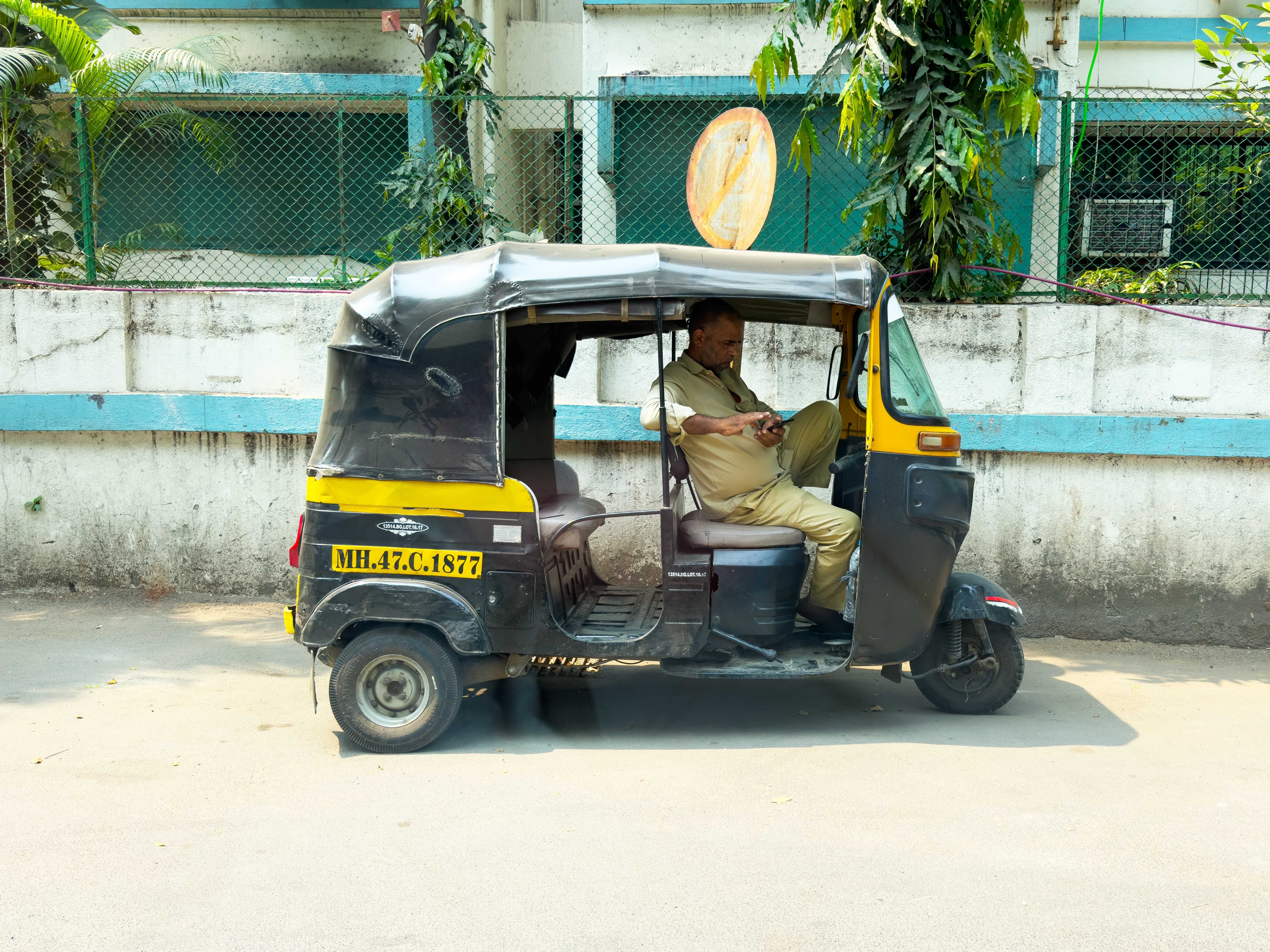
A rickshaw driver sits in his cab, parked, not waiting for anything in particular, just sitting in the shade of his own vehicle.
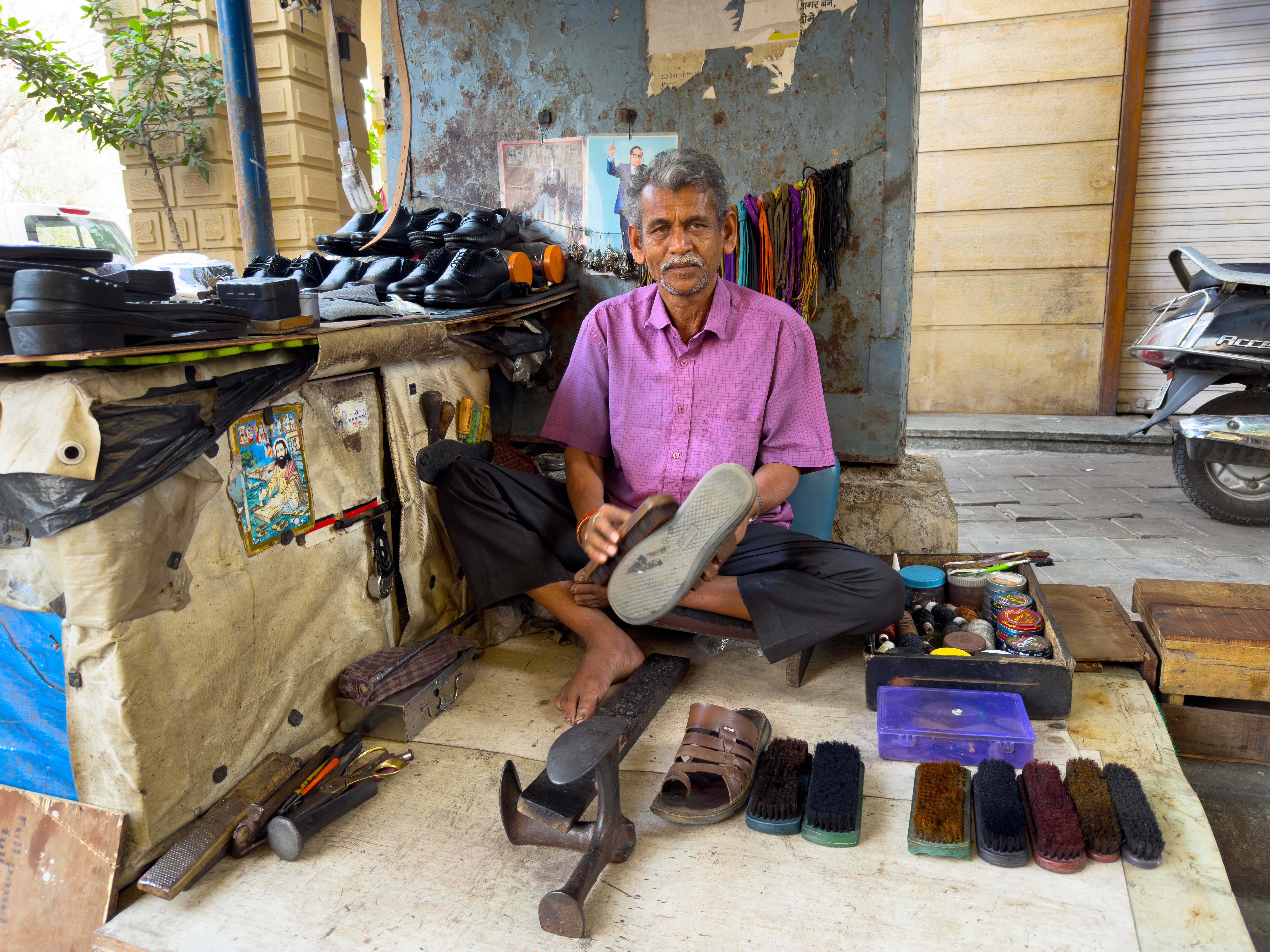
A cobbler works on my shoe, cross-legged on the pavement, his tools arranged around him like a small country: brushes, polish, a cast-iron shoe form, my other shoe on the ground waiting to be worked on. He looks directly at the camera. He is not performing. He is not hiding. He is there. I sat on the curb and watched him work. I had nowhere to be.
In Denmark, where I grew up, there is an expectation that you will be happy. It is almost structural. The society is designed for it, and if you are not happy, you wonder what is wrong with you, because the conditions are right, so the deficit must be yours. In the US, the expectation is success. Work hard enough, want it enough, and the life you are supposed to have will arrive. When it doesn’t, people carry loss and disappointment in their chest without naming it.
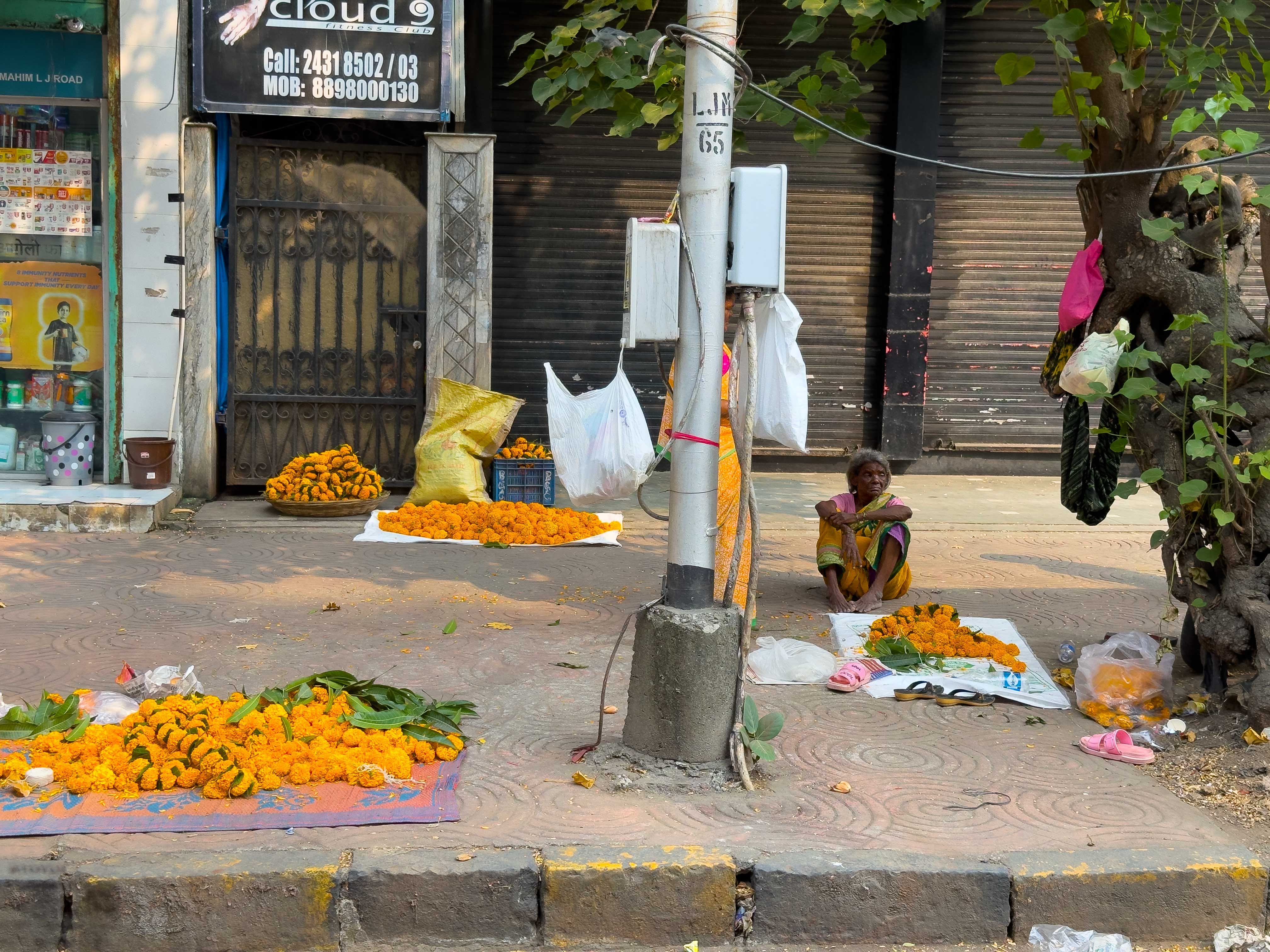
In Mumbai, I saw a woman sitting on the sidewalk stringing marigold garlands early in the morning. Behind her, shuttered shops, and in front, a lamppost with plastic bags tied to it. She was not rushing. She was not checking her phone. She was making garlands the way the cobbler was mending shoes: with her hands, in public, for the day ahead. There was no visible expectation that this should be something other than what it was. No narrative of progress or self-improvement running underneath it. Just the garlands, the orange petals, the morning light falling across her work. I stood across the street for a while, not wanting to interrupt. For a second, I wondered what it would be like to be her. In that moment, I wanted what she had, and I don’t mean the garlands.
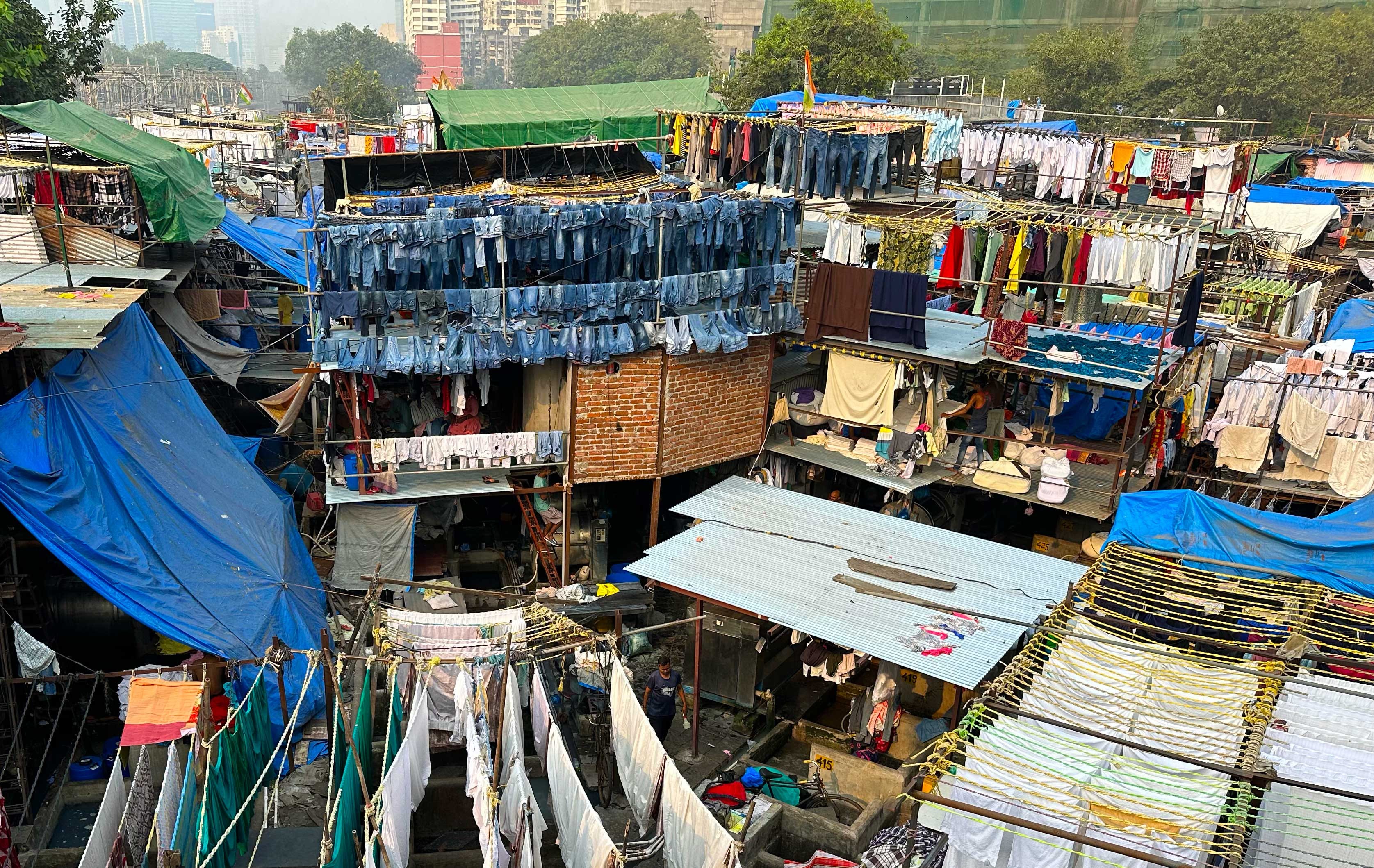
I am not saying there is no suffering in India. There is suffering I will never know. Blue tarps stretched over makeshift shelters along the highway, an open-air laundry area with clothes hanging on lines between corrugated roofs, buildings so weathered they look as if they are slowly returning to the earth from which they were built.
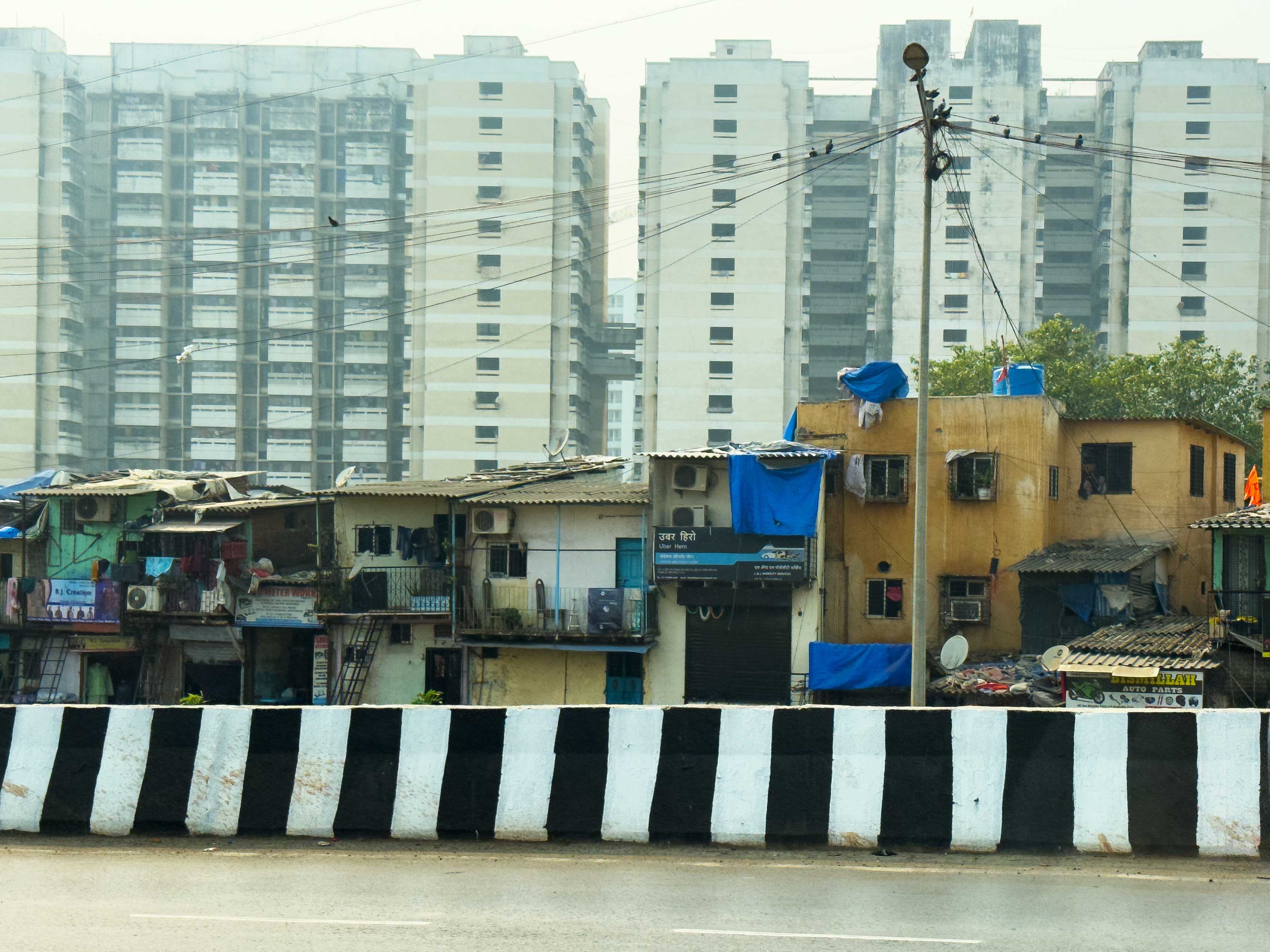
One afternoon, I looked out the car window and saw slum housing pressed against the base of a gleaming high-rise, the two structures almost touching, as if the city had forgotten to decide which version of itself it wanted to be.
But the suffering I did not see was the particular Western kind that comes from believing you should be somewhere other than where you are. The pain of not being successful enough, not being happy enough, not living the life the culture promised. That gap between expectation and reality, which in the West fills entire industries of therapy, self-help, and medication, seemed not to operate in the same way. People were where they were. There is a freedom in that I have not found in the Western world.
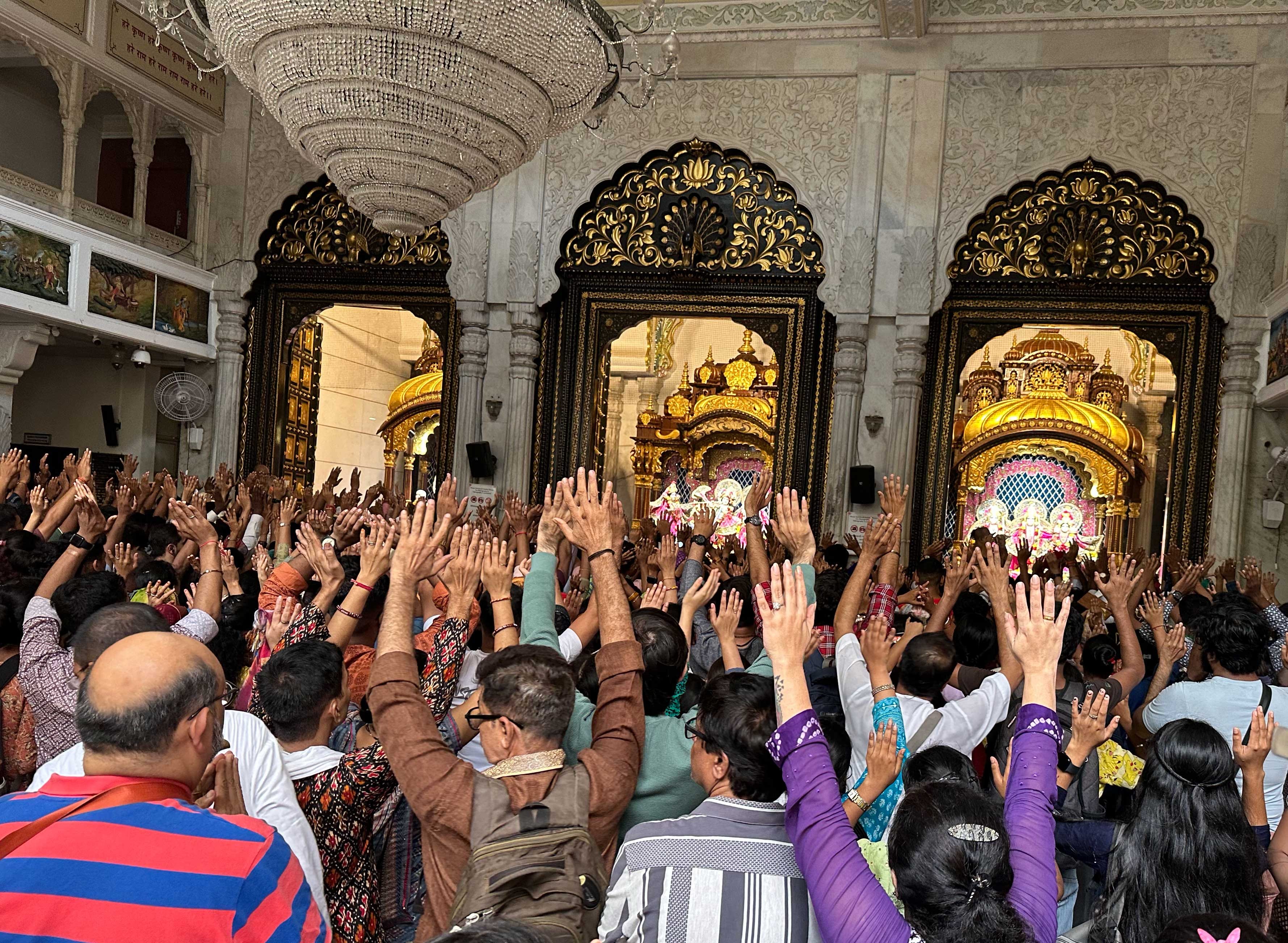
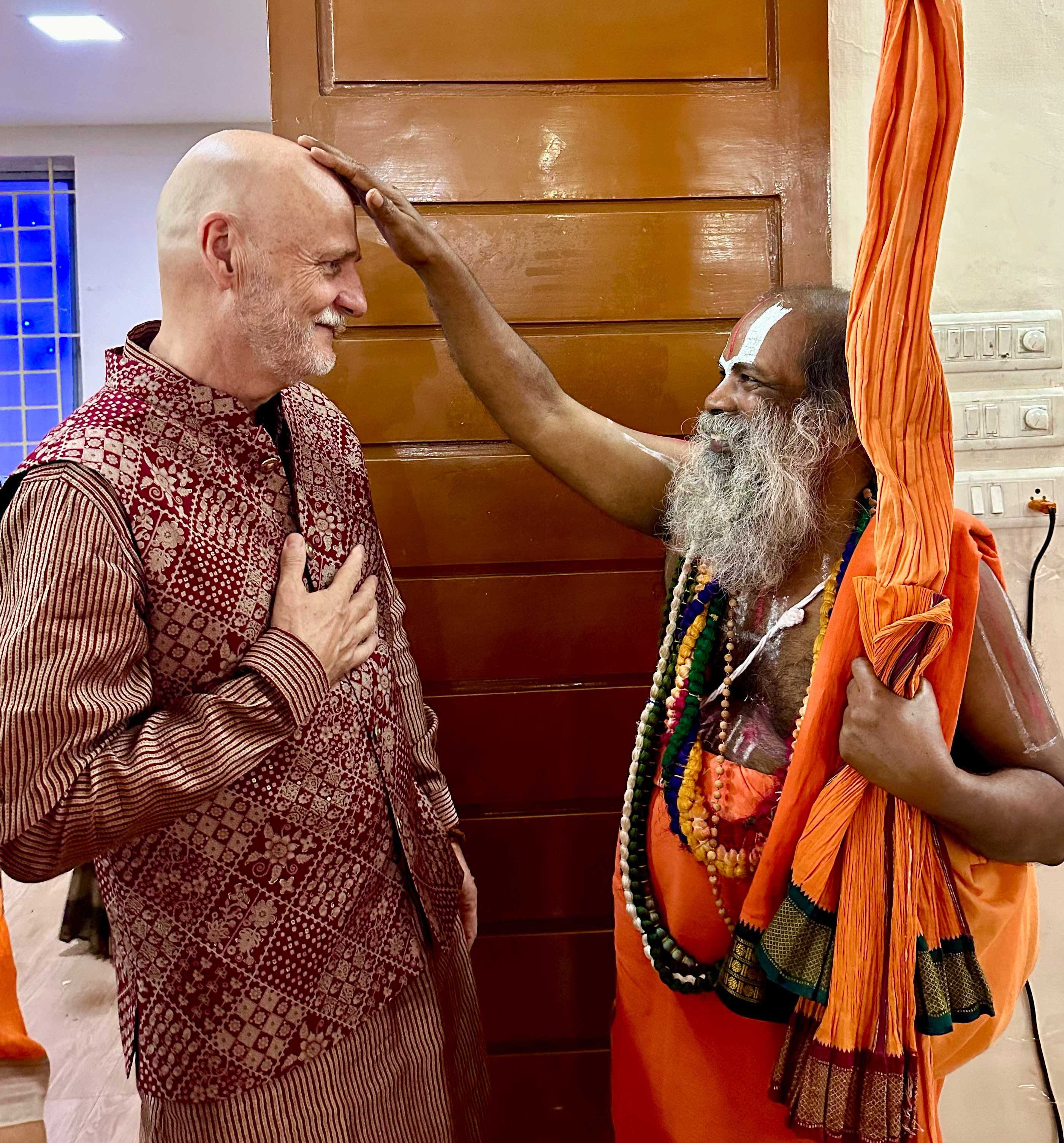
I visited a temple one evening. I wore white Indian clothing, mala beads, went barefoot on the stone floor. People raised their hands toward the golden shrine and the sound in the room was not silence but a kind of breathing hum, hundreds of voices and the air between them. I was not pretending to belong. I was not having a spiritual experience in a way I could defend. But people noticed I was dressed in Indian clothing, and they appreciated it, and that surprised me. I had expected to feel like a visitor. I felt like a guest. The difference between those two things is larger than it seems.
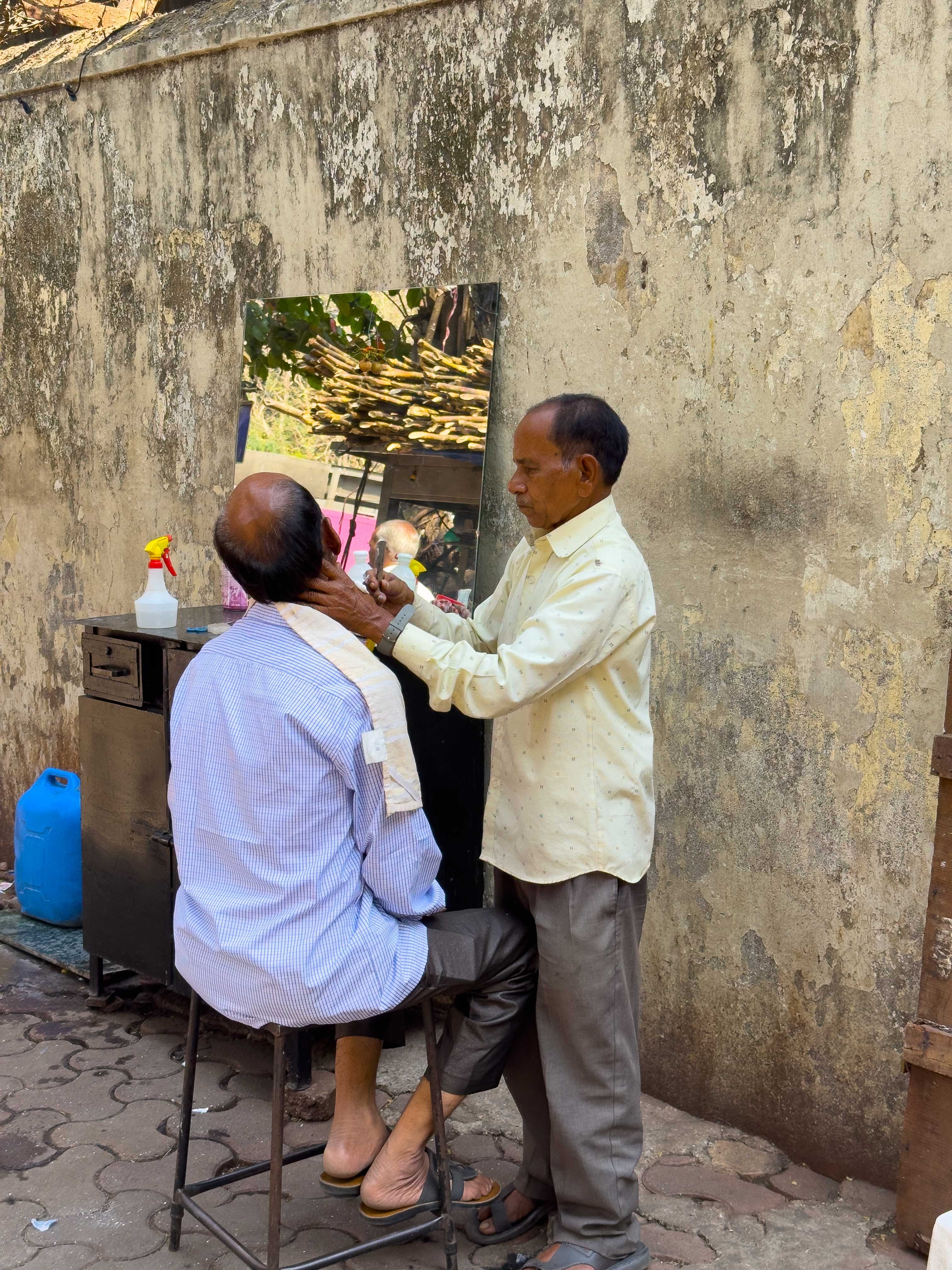
A street barber shaved a man’s face against a peeling wall, a small mirror propped on a metal stand. His tools were a razor, a spray bottle, a towel. Behind him, the wall’s plaster had fallen away in patches, exposing the stone beneath. He worked with the focus of a surgeon. His customer sat still, eyes closed, and the two of them together, framed against that crumbling wall, looked like a painting of something the modern world has mostly forgotten: the ordinary trust of one person tending to another in broad daylight with nothing between them.
I think about that barber when I think about expectations. He did not expect the wall behind him to be beautiful. He did not expect his work to be anything other than what it was. And because of that, it became something more than what I would have seen if I had walked past with my Western eyes still looking for a story about progress. What I saw instead was just a man, shaving another man’s face, on a street in Mumbai, in the warm light of an ordinary afternoon. It was enough. It was more than enough. It was the whole thing
I’m a writer exploring consciousness, relationships, and the inner life. I run a publishing company where I help thoughtful people turn lived experience into books, and I work one-to-one with individuals navigating personal transitions.
The pictures are so beautiful! As someone living in Mumbai right now, it's refreshing to see an outsider's perspective that doesn't romanticize or exotify the scenes.
Loved it!!